

Dan Dvoracek
The circular economy aims to shift away from the so-called linear economy by limiting resource waste and environmental impact, while also increasing efficiency at every stage of a product’s life cycle.
You’ve probably already heard of the “3 Rs” (Reduce, Reuse, Recycle), the pillars of this new economic model — but it doesn’t stop there!
Here, we want to explore the 10 “Re’s” of the circular economy and share a few tips to make your daily life even more sustainable.
1) Refuse
One of the most sustainable things you can do is simply not buy or use something in the first place. It starts with small gestures, like avoiding printing emails or tonight’s recipe — just read it online or take a screenshot you can keep on your phone.
When you’re shopping at the supermarket, refuse single-use plastic bags and choose containers that can be used multiple times. Make this a habit now: say no to things you don’t truly need.
2) Rethink
Change begins in the mind. The circular economy is about conscious consumption — not only when buying, but also when using.
For example, regularly cleaning and maintaining your washing machine can significantly extend its lifespan. This mindset can be applied to nearly every everyday object: clothes, shoes, appliances, books, tools, and more.
Also consider borrowing something or making it yourself instead of buying it. There is so much we can rethink in our consumption habits and in how we use our resources. Awareness is the first step — action is the next!
3) Reduce
What was your last regretted purchase? Most of us buy something from time to time only to realize later that we didn’t actually need it.
Consuming less — and consuming responsibly — is one of the foundations of the circular economy. It’s always worth asking yourself again: “Do I really need this?”
4) Reuse
Old books, dusty devices, clothes that no longer fit, toys your kids don’t use anymore — these are all items you don’t need but someone else could enjoy.
Whether exchanging, donating, or selling, there are many platforms that connect you with people who will be happy to give these items a second life. Various swapping apps also exist to reduce overall consumption.
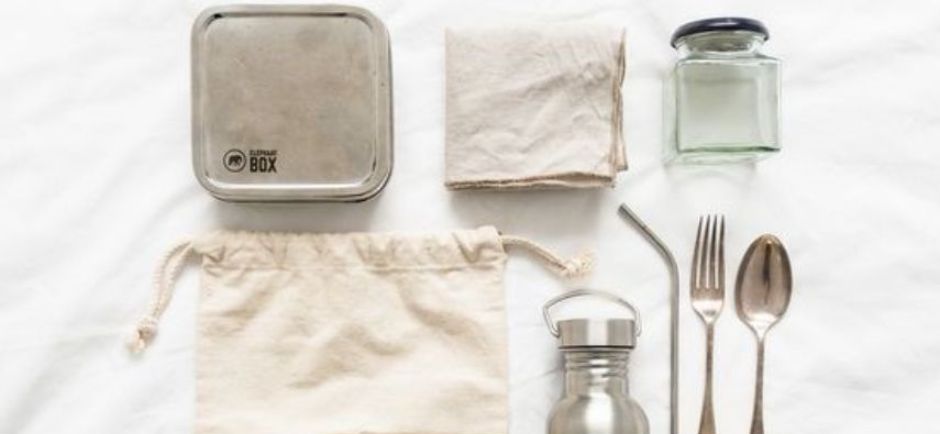
There are also reusable alternatives for many everyday items: travel coffee mugs, organic cotton produce bags, lunch boxes, etc. Extending a product’s life cycle through reuse has a real impact on its ecological footprint.
5) Repair
A lot of things are thrown away even though they still work — or could easily be fixed. Whether it’s patching a pair of pants or repairing a coffee machine, the internet is full of free tutorials.
And if you’re not handy, ask someone you know or visit a Repair Café, where people help you fix your items.
You can also pay attention to durability and repairability when buying products. Keeping items in circulation as long as possible requires not only responsible consumers, but also responsible manufacturers (extended producer responsibility). Repairability is increasingly demanded — also at the European level.
6) Refurbish
Make something old look new again! Sometimes you don’t need to buy new at all — a makeover is enough.
You can give a piece of furniture a fresh look by repainting it or refresh a clothing item using dye or accessories. Pinterest is an excellent source of inspiration for this.
7) Remanufacture
This one may be less obvious for the average consumer. It involves using functioning components from an old or discarded product in a new product.
For example, engines or entire machines are refurbished and reused as complete components in new equipment. If you’re not going to do the assembly yourself, you can bring your devices or parts to workshops that specialize in repurposing and upgrading them.
8) Repurpose
Often called upcycling, this concept gives objects a new function.
You can turn tin cans into pencil holders or vases, make a backpack from an old T-shirt, or design outdoor furniture from pallets or old wood. The internet is full of creative ideas — and there are workshops to help you get started.
Upcycling is the trendy, stylish side of reuse. In Switzerland, the recycling rate is over 50%, making it one of the world’s leading countries in waste recovery.
9) Recycle
The most famous “Re” is still essential! Recycling reintegrates resources into the production cycle and makes them available for new products.
Keep sorting, collecting, and bringing items to the right recycling points — it truly protects the environment. You can find all information about urban waste recycling on the website swissrecycling.ch.
10) Recover
The last “Re” refers to recovering resources. In addition to the other practices mentioned, it is always possible to extract energy from waste.
Switzerland’s thermal waste-to-energy plants meet the latest standards and are the country’s second-largest producer of sustainable energy (after hydropower).